20 januari 2021
Gisteren vond een geaccrediteerde webinar plaats over de GGZ in de tropen. Het was een interactieve online bijeenkomst voor tropenartsen en andere medici, georganiseerd in samenhang met het tijdschrift MTb van de Nederlandse Vereniging voor Tropische Geneeskunde. Er werd veel aandacht besteed aan de stigmatisatie van psychiatrische patiënten.
In een interview van Afra van der Markt met Amy Besamusca werd tijdens het webinar aandacht besteed aan trauma en cultuur in post-war gebieden. Hieronder een transcriptie van het interview.
In the book ‘Een goede geest bestaat niet’ you describe the story of Victor, a Rwandan guy who experiences the Rwandan genocide, but who managed to escape to Belgium. The book has a strong focus on how Victor is coping with these experiences. Could you explain why you wrote this book?
The book just had to be written. That is how I felt. To connect cultures, not only looking at another culture. Looking at another culture can make you astonished, there are many books about this. I wrote one myself before. But I didn’t know any book about being part of it.
Thinking about genocide and war is different from being part of this cruelty and living with the consequences. And then Victor gave me the opportunity to explain so many things about individual post war mental problems. I didn’t write a textbook, it had to be a novel to be part of what happened.
To be a good international health professional you have to be aware and to be able to really understand and respect cultural differences. I think this is why the book got so much professional attention.
Could you explain the meaning of the title?
The Dutch word ‘geest’ can be translated in different ways: spirit, mind, ghost.
‘In Rwandan culture a good ghost doesn’t exist.’ Victor expressed this sentence while telling his story to me for days and days. Although he was in a safe surroundings, he almost panicked while saying this. This has so many consequences for people living in another culture than ours.
Secondly the sudden behaviour of people in a genocide, people that are always calm and nice to each other, showed that their enjoyable mind was not existing. It was all evil what they did, what they were forced to do after being brainwashed by leaders.
In the third place, although not being a perpetrator, afterwards Victor has to behave as a good spirit. This aspect is seen in many survivors, that struggle with a guilt of not being dead and leaving other survivors behind in poverty.
And last but not least, the international society – UN – proved not to be a good spirit, while looking back of what was happening and only taking into account the interest of West European countries. They kind of accepted the killings for other sakes, that were founded in colonial times and didn’t help the people. Even some later strategies of UN were not based on saving African lives but on mostly European interest. UN administration failed like Rwandan administration did.
You yourself work as a psychiatrist both in the Netherlands as in Burundi. What symptoms do you see in Victor and what would your diagnosis be for Victor?
First of all I see suffering, agony. Life is a struggle. I see a human being who lost everything that he loved.
His symptoms change in time, but he has periods of serious depression. Most of his symptoms however are related to fear, panic and guilt; psychosomatic and even psychotic. His symptoms don’t fit in Western diagnostic systems, but most of his symptoms are trauma related. As a consequence he gets trouble in his relations. He also suffers from the fact that people in his surroundings have no idea about his roots and culture, as if he has no right to exist.
In my work in Africa I see so many patients with tremendous agony. Refugees in Western countries often show the same: a combination of symptoms that we cannot fit into our diagnostic systems. Too often people are diagnosed with schizophrenia while they suffer from trauma, just because the caretaker is not aware of trauma related cultural reactions.
What are some of the cultural factors in the story of Victor? Does he fit the DSM criteria or is the DSM only applicable in Europe and the USA?
He grows up with respect for the ancestors and at the same time Christian religion. Western colonial fathers thought they banned paganism, but in fact they provoked a stronger and illegal animism. Victor also grew up with poisoning, poisonous snakes and poisonous people. But he was a happy boy. Coming of age he is getting aware of the influence that people have and right away he is in the middle of the war.
His later symptoms don’t fully fit in DSM 5 criteria, as we just discussed, but we know that on the cultural level DSM 5 is still at an early stage. His trauma related symptoms are clear. Some fit in it, some don’t. But look at his brother, a man with schizophrenia, who only accepts cultural explanation for his symptoms. For this man DSM 5 is clear, but protocol treatment is not. The same we see in patients with somatic diseases.
So I take agony as the most important aspect to react on as a doctor, if there are of course no life threatening symptoms. And this helps to start a more intense contact and to become trustworthy to the other person, where DSM doesn’t.
Did you know that in 20 years of worldwide research on psychiatric treatments, only 7 surveys were done in development countries? Only 7 ! So we still don’t know how to select cultural aspects from mental and physical symptoms and we have hardly tried to understand it.
You currently (before covid) work as a psychiatrist in Burundi. How is psychiatric care set up in Burundi?
I worked in Rwanda, Uganda, Congo (DRC), Burundi, Kenya and Malawi, but indeed most of the time for Foundation Knowledge without Borders (Kennis zonder Grenzen) in Burundi, a country that is totally forgotten by the world, that still suffers from the 1993 genocide. 12 million people there live in an armed peace, so to say. We assist in the only psychiatric hospital in Burundi by consultation and supervision and training. From this psychiatric hospital we started education in the provinces in the hills and mountains. Using the WHO-method mhGAP we first trained local doctors to become trainers (and trainers of trainers). Together with them we train doctors and nurses in health centres and general hospitals, because in their education they never were trained in mental healthcare. We also train them in psychosocial support. At the same time we train community workers how to decide if people need medical or mental help. The community workers are keyholders to bring the ill people to the health centres. At the end of the training we also start a very practical referral system.
Can you elaborate on stigma when it comes to psychiatric illness in Burundi?
Yes. Wherever in the world, if you don’t behave according to the local culture, there will always be stigma, because the so-called normal people will be afraid of you. It is not always the mental illness that is frightening for others, it is the behaviour.
I see Burundian patients that recovered from psychosis that are fully accepted and rehabilitated. But this is in the city. Patients that avoid care and patients in rural areas are often stigmatized, but not worse than in the Netherlands. Group culture however is strong and most stigmatized persons are still taken care off by giving them food or some money. Most people understand that war created too much mental illness, like it also created orphans.
And what about stigma when it comes to psychiatric care in the Netherlands (did your view on this change because of your experience abroad?)
It is not my work abroad that changes my view on stigma in the Netherlands, it is the growing intolerance in general in the Netherlands. We were supposed to have a culture of tolerance, but our leaders and social media show us the reverse now.
We have no real group culture here, we seek for our individual interests. This indeed I feel since I work in Africa. Ubuntu, an ethical philosophy from Africa saying ‘I am because we are’, is lacking in the West. I wrote several columns about this for VNVA (Dutch organisation for female doctors).
The worse stigma in the Netherlands that I see is Dutch caregivers stigmatizing patients from other cultures. For example if you don’t know what is wrong with a patient, you call him schizophrenic (ignoring cognitive or somatic symptoms). Or another example is a psychiatric hospital where several diagnoses for people from other cultures are not accepted, because treatments are too expensive.
But the other way around is also possible, for example expats that feel insulted by a habit or a typical Dutch remark, that is not meant to be rude at all.
Do you have a final message for the people who are watching?
Let me say this. I hope that you will enjoy working with people from other cultures, whether it will be in the Netherlands or abroad.
Cultural concept of distress after war and loss, but also in health care and mental health care, is worth to understand. I hope you will read the novel with this in mind. Become a good spirit!
Verantwoording:
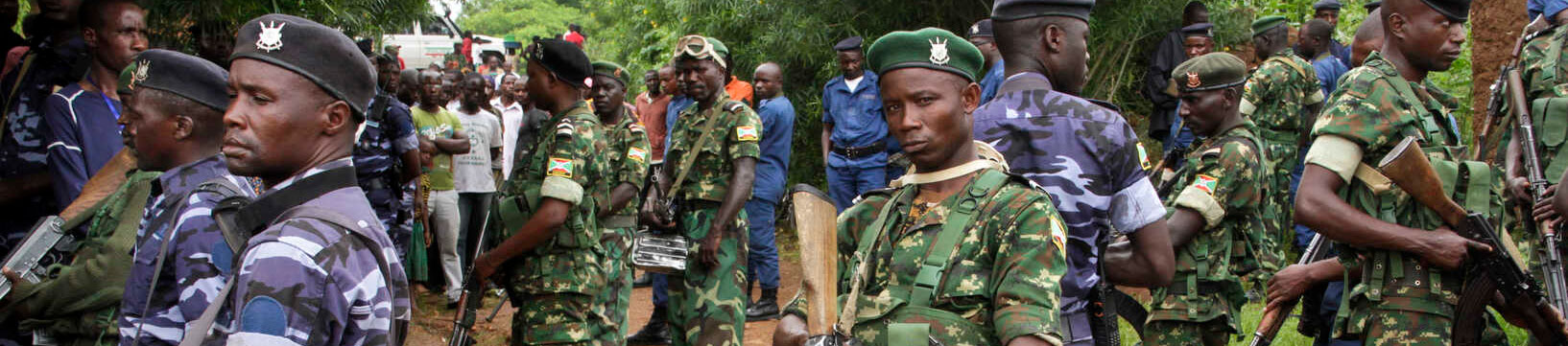
De foto is een still van Youtube.